
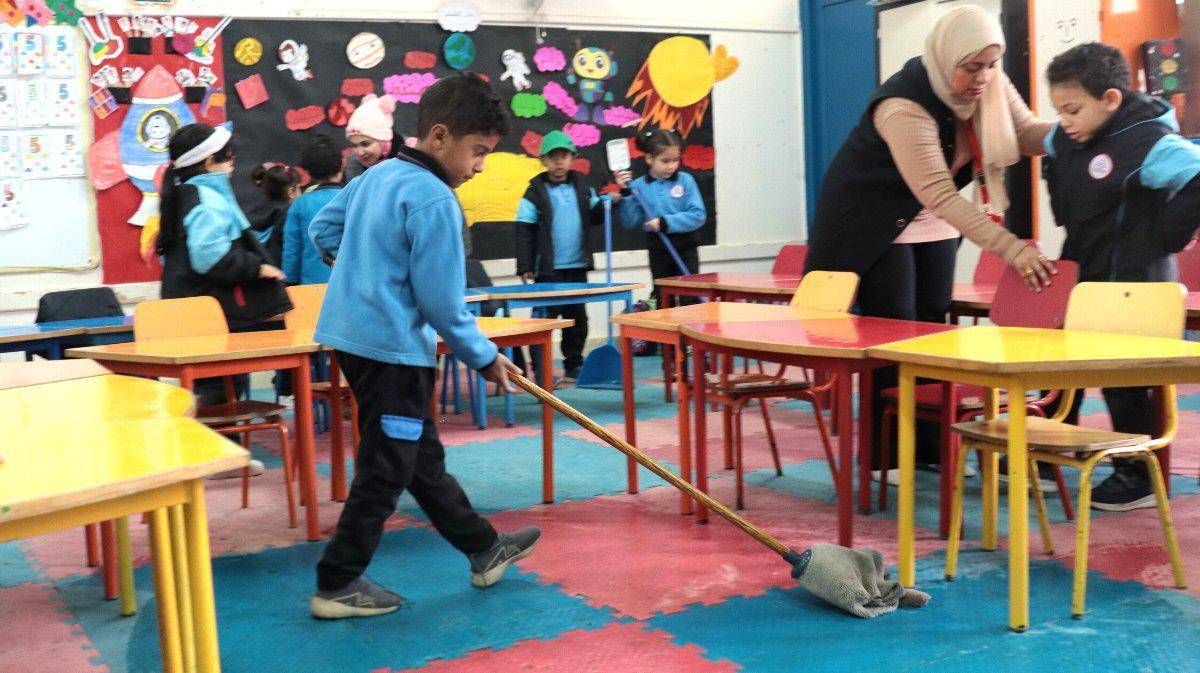
(Adnkronos) – The Egyptian government is pursuing education reform through special activities outside the regular school curriculum, such as class meetings, student-assigned duty rosters, and classroom cleaning by students – practices that are commonplace in Japanese schools. Based on the experience gained over the decade since the conclusion of an educational partnership with Japan in 2016 – Jiji press reports – Egypt is now seeking to promote broader social change through Japanese-style education. ‘Tokkatsu’, or special activities, is based on the idea that school functions as a small society. Such activities are designed to promote student autonomy, relational skills, and a sense of civic responsibility, inviting them to collaborate to autonomously address various issues. Reportedly, Egyptian President Abdel Fattah el-Sisi was impressed by the sight of children preparing school lunches at an elementary school he visited during his trip to Japan in 2016. Since then, the adoption of Tokkatsu in Egypt has made progress.
Education in Egypt has traditionally been characterized by a rote learning approach, with teachers delivering one-way lectures in overcrowded classrooms. The system has often been criticized for failing to ensure that students acquire basic academic skills or develop practical social abilities. In 2016, the Egyptian government launched Vision 2030, a comprehensive social transformation plan aimed at strengthening international competitiveness and improving citizens’ quality of life. As part of the education reforms that constitute a fundamental part of this plan, Tokkatsu has effectively been designated as a central initiative. Japan has sent instructors and provided loans through the Japan International Cooperation Agency. In 69 locations across Egypt, model schools named “Egypt-Japan Schools” have been established, where the Tokkatsu system is fully implemented, and each student is provided with an individual desk and chair conforming to Japanese standards. The Egyptian government plans to increase this number to approximately 500 in the next five years.
A simplified version of Tokkatsu, known as “Mini Tokkatsu” and focused on key practices such as class meetings and the rotation of daily service duties, has been incorporated into the primary school curriculum and is expected to be introduced in public schools nationwide. During a meeting held in January, Egyptian Minister of Education and Technical Education Mohamed Abdel Latif asked Japanese Education Minister Yohei Matsumoto, who was visiting Egypt at the time, to further strengthen bilateral cooperation in areas such as teacher training. Matsumoto then told reporters that the “export” of the Japanese educational model would help train human resources capable of serving as a bridge between the two countries. He also expressed his intention to continue providing support, stating that Japan would “promote initiatives beneficial to both parties”.
El Nasr Elementary School, a regular public school that welcomes children from middle-class families, is located in the residential district of Agouza in Giza, directly across the Nile from central Cairo. The principal, Ali Al-Sanousi, describes Tokkatsu as the embodiment of “a new spirit of cooperation” and “a strong desire to discover and enhance individual talents.” The school has implemented the Mini Tokkatsu program since 2019. According to an instructor, the program has helped students gain self-confidence, and even children who previously had behavioral problems now actively participate in activities with classmates. However, these positive results have been accompanied by significant challenges. In Egypt, cleaning is considered a job for lower social classes, and some parents objected to their children being assigned cleaning duties. At one point, Ministry of Education officials intervened, ordering the suspension of cleaning activities. Furthermore, because Egyptian society places such great importance on formal qualifications, initiatives not directly linked to entrance exams are often ignored or taken lightly. For Tokkatsu to succeed in Egypt, the adults surrounding the children, including teachers and parents, must understand its value and move beyond conventional ways of thinking. Al-Sanousi noted that the local adoption of Tokkatsu is far from simple, explaining that some public schools “do not apply the system as effectively” as his school.