(Adnkronos) –
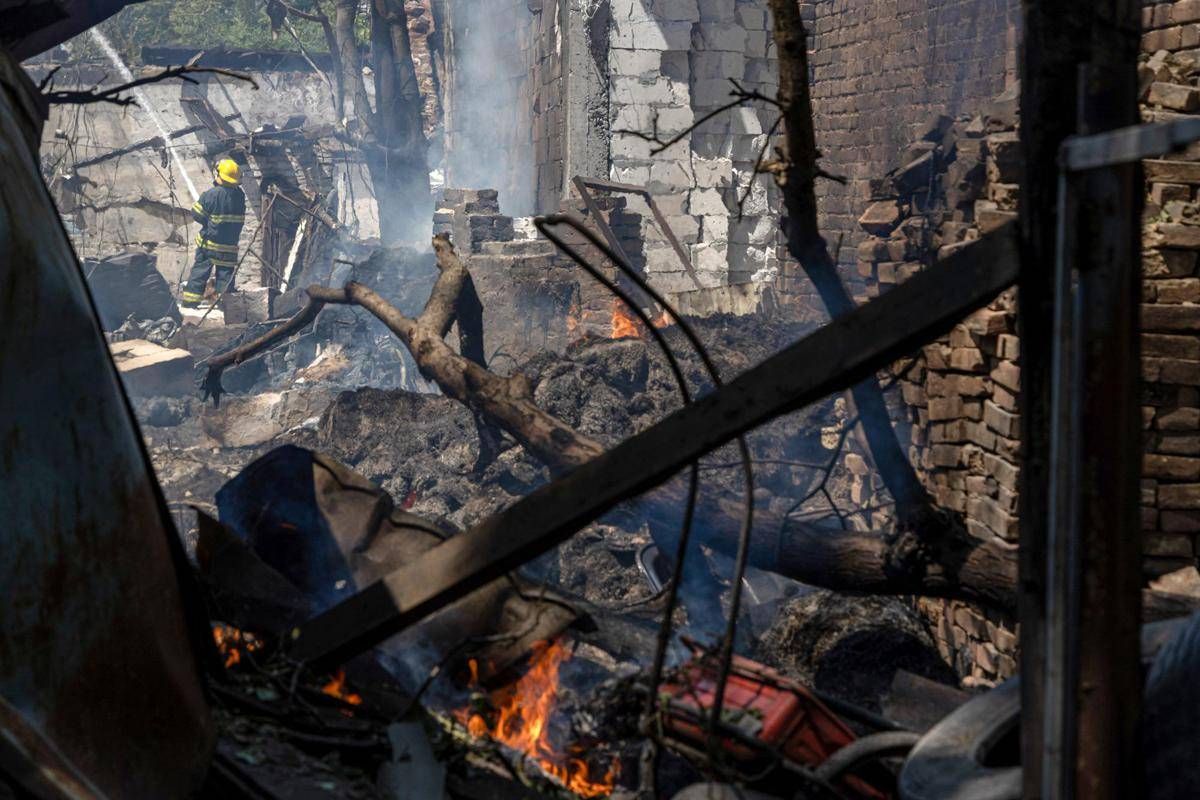
Russia has a new objective in the war with Ukraine. Moscow is trying to isolate the Odesa region from the rest of the country, particularly by conducting attacks against infrastructure. The strategy appears clear, based on information released by Ukrainian President Volodymyr Zelensky.
“The Russians certainly want to isolate Odesa and other cities” from the rest of Ukraine, “through attacks on infrastructure. They are hitting port infrastructure, they are hitting and killing both people and the economy, reducing our export capacity through the maritime corridor.” “We are recovering, we are able to do it and we are doing everything as quickly as possible. All of this is extremely important to us,” the president stated.
Kyiv is engaged in dialogue with the United States to reach an agreement on the peace plan. Russia, however, beyond proclamations and announcements, continues to pound Ukraine. And now it seems intent on expanding the defense lines, already engaged particularly in Donetsk and the Zaporizhzhia region.
The scenario outlined by Zelensky coincides with what was anticipated in recent weeks by the Institute for the Study of War, an American think tank that monitors the conflict daily. Isw does not rule out the opening of further fronts in a war that Russia has no interest in ending quickly. Moscow “could establish conditions to threaten the Odesa oblast from Russian-occupied Transnistria, in an attempt to stabilize Ukrainian forces in southwestern Ukraine.”
Isw refers to information recently provided by Ukrainian military intelligence (Gur), according to which the Kremlin is attempting to strengthen its presence in Transnistria by recalling reservists, withdrawing weapons from depots, and establishing drone production and training centers.
Such measures will increase the risk of infiltration by Russian sabotage and reconnaissance groups into the Odesa oblast from Transnistria: the capital Tiraspol is located approximately 80 kilometers from the city of Odesa, a potential target for medium-range Russian drone attacks. Moscow’s forces have already successfully conducted attacks in Ukrainian rear areas at an operational depth (approximately 25-100 kilometers) in recent weeks using specialized drone units and could likely transfer some of these capabilities to units in Transnistria.
A similar strategy could allow Russia to divert Ukrainian resources from the front line and rear areas, forcing Kyiv’s forces to defend themselves in a new theater. According to Isw, it is unlikely that the invaders can conquer the Odesa and Mykolaiv oblasts in the short term: operations would develop with limited blitzes and drone attacks.