
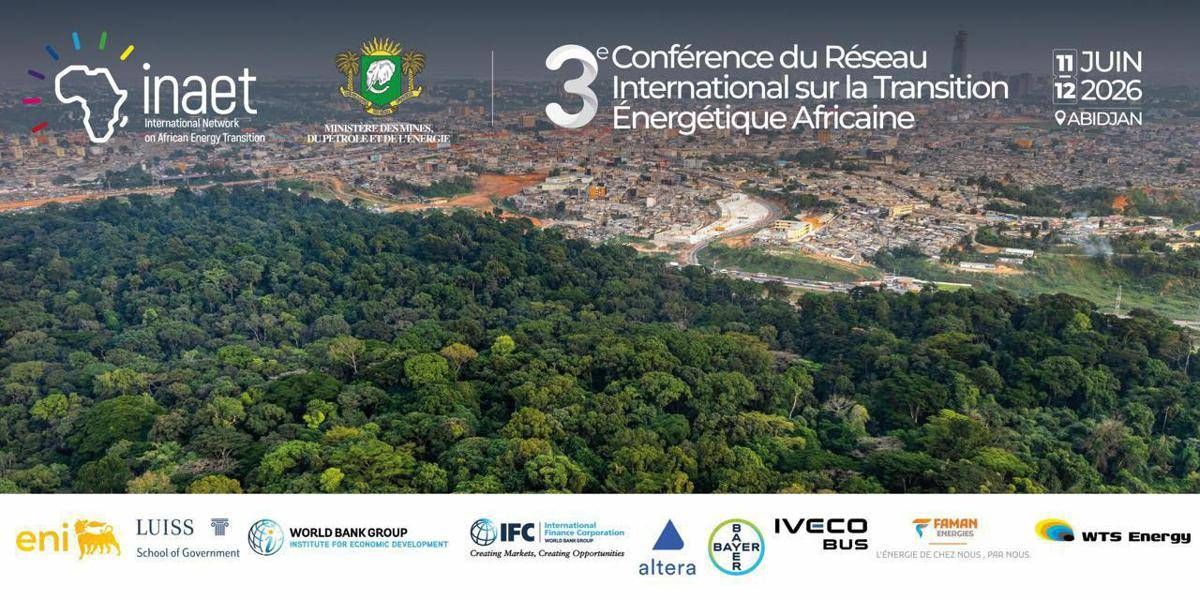
(Adnkronos) – The International Network on African Energy Transition (Inaet) is organizing its third conference in Abidjan, on June 11 and 12, bringing together recognized leaders in the energy sector to discuss solutions aimed at promoting a just, inclusive, and investment-oriented energy transition on the African continent. From energy access to sustainable agriculture, from biofuels to clean cooking solutions, up to carbon markets, policymakers, financial institutions, international organizations, private sector representatives, academics, and civil society members from African countries and other parts of the world will engage in discussions.
Inaet is today a multi-stakeholder international network promoted by Eni and the Luiss School of Government in Rome, in collaboration with the World Bank Group, including the Institute for Economic Development and the International Finance Corporation. The objective is to foster dialogue and cooperation between African and international actors, creating a bridge between academia, institutions, and businesses. This year’s edition includes a side event organized in collaboration with the International Renewable Energy Agency.
The event will be dedicated to the priorities of African countries in the field of bioenergy and will see the launch of the Network on Bioenergies in Africa, a joint initiative developed within the partnership between Eni and Irena. The initiative is based on the shared commitment of the two organizations to consolidate the collaboration started through the capacity building program on sustainable biofuels, which involved numerous African public officials between 2022 and 2024.
Organized under the high patronage of the Ministry of Mines, Petroleum and Energy of the Republic of Côte d’Ivoire, the Inaet edition in Abidjan is supported by sponsors and partners including Bayer, Altera Infrastructure, Wts Energy, Iveco, and Faman Energies, who will contribute to enriching the debate with an investor perspective. The conference will include institutional speeches, high-level dialogues, and roundtables. Participants are expected from institutions such as the African Union, the World Bank Group, the African Development Bank, Irena, Fao, Berd, Ecfr, and Columbia University, as well as representatives from important African and international companies and research centers.
“In the last three years, Inaet has evolved into a solid multi-stakeholder international platform – declares Lapo Pistelli, Eni’s Director of Public Affairs – capable of bringing together a wide range of actors around a common goal: to promote a just, inclusive, and investment-oriented energy transition in Africa.” For Gero Carletto, Head of the Rome Center of the Institute for Economic Development of the World Bank Group, “ambition alone will not fuel Africa: data and evidence are needed. African utilities have some of the most valuable operational data on the continent, but this information largely remains unused in strategic decisions. The Institute for Economic Development is here to change this situation. In Abidjan, we propose a reliable data partnership.”
The African energy transition, adds Domenico Lombardi, Director of the Policy Institute of the Luiss School of Government, “does not follow a single narrative: it is a mosaic of national realities, each of which requires tailored solutions, based on evidence and guided by local leadership. Inaet was conceived precisely to address this complexity.”