
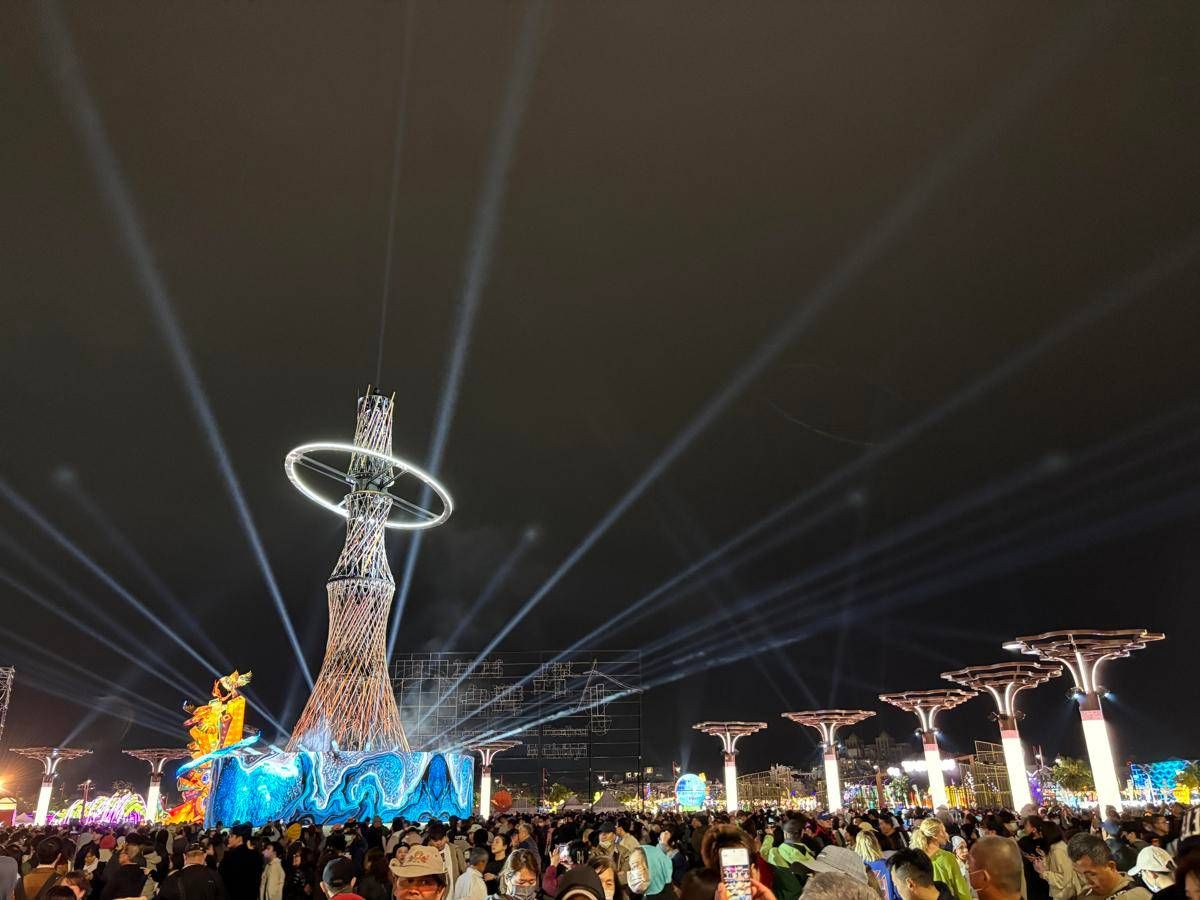
(Adnkronos) – Futuristic skyscrapers, popular bubble tea shops, and vibrant night markets.
But that’s not all: the southern city of Chiayi, Taiwan – Jiji Press reports – which hosted the Lantern Festival this year, boasts many fascinating but relatively unknown historical sites with deep roots in Japan. This year’s main lantern, 21 meters high, the island’s largest event during the Lunar New Year holiday period, showcased Chiayi’s rich and distinctive history, taking spectators on a journey through time across centuries, in a five-minute spectacle imbued with dazzling lights, music, and mist sprays. A circular screen surrounding the base of the majestic tree-shaped lantern displayed scenes ranging from the formation of the island of Taiwan to the prosperity of the local indigenous Tsou people, as well as the Alishan Forest Railway, established by Japan in the early 20th century to transport cypress timber cut from the mountains. The Alishan area developed as a timber production center under Japanese rule. Its high-quality cypress timber ended up in many famous shrines and temples in Japan, including the Daibutsu-den of Todaiji Temple, or the Great Buddha Hall in Nara, an ancient Japanese capital.
The Lantern Festival served as a venue for cultural exchange between Taiwan and Japan. This year, a huge “nebuta” float – a traditional paper lantern featured in a popular festival in Aomori Prefecture, northeastern Japan – appeared for the first time at the annual event, attracting visitors’ attention with its colors, shape, and size. The nebuta created for the event depicted Mazu, Taiwan’s famous sea goddess. Since a nebuta usually takes about two months to create, “it was a challenge” to complete the work in just one month in a foreign land, said nebuta creator Makoto Suwa. Another creator, Hiromi Hayashi, who worked with Suwa, spoke about his approach to capturing an image of the exotic deity, stating: “People in Taiwan often go to temples and pray to statues of gods, so they have specific images of them.” Bearing this in mind, the creators visited local temples to ensure their representation was recognizable. Taiwanese visitors admired the nebuta. “I was amazed. They looked like they were moving,” said Wang Yi-jang, who came to the event to visit a stand with Super Mario, a Nintendo Co. character, with a friend. Wang added that he was “happy to see a representation of Mazu from the perspective of Japanese artists.”
Japan ruled Taiwan as a colony for half a century until 1945, and buildings from that period still remain in many corners of the island. During Japanese rule, there were numerous conflicts with the local population due to oppression, but according to a local guide, Taiwanese people have chosen to preserve many colonial-era buildings, giving them new life as new tourist attractions, supported by the recent “retro” trend among young people. “Many people in Taiwan have a positive image of Japan for its anime and manga rather than focusing on history,” the guide said. Furthermore, Taiwanese people are inclined to preserve old buildings regardless of their origins, she added. For example, many railway station buildings constructed by Japan are used as public spaces, even after ceasing to serve their original role. The Beimen Station of the Alishan Forest Railway in Chiayi was a center where timber was collected from the mountain for export. The mountain railway is popular among tourists, especially who wish to trek and admire the sunrise. The former station building stands silently near a small park and a childcare facility. Painted in a vivid green, the wooden building delights visitors as a cafe and souvenir shop since 2023.
The former Taichung station building in the central region of the island is a distinctive structure made of red bricks, white limestone, and a slate roof, reminiscent of the iconic Tokyo Station in the Japanese capital. The former station, much larger than the old Beimen station, now serves as an outdoor exhibition space, where visitors can closely observe old railway tracks and explore an old renovated train transformed into a general store adorned with seasonal decorations. The red brick walls with posters of anime characters, such as “Crayon Shin-chan” from Japan, are an unexpected combination, but this might show the tolerance of Taiwanese people towards foreign culture. Cultural exchanges between Taiwan and Japan are also evident in modern-style tourist destinations. The acclaimed Japanese architect Toyoo Ito designed the National Taichung Theater, built in 2014. Since then, it has become a city landmark for its unique design, including curved exteriors and cave-like interiors. Built opposite a large park, the work has the atmosphere of an urban oasis. Also in Taichung, the popular confectionery shop Butter Hotel features contemporary artists, including Tomomi Awaji and Hikaru Matsubara from Japan, to create an imaginative hotel-like shop. The yellow building looks like a classic Western-style hotel, but it is actually a butter cookie shop full of dreamy and photogenic artworks, such as fake elevators and a shower that emits music.
The shop is also known for the various gift boxes created by international artists. Matsubara designed a box with an original character that blends pineapples and bubble tea, typical of Taiwan, while Awaji created an artwork inspired by the popular MBTI personality test, expressing the importance of mutual understanding. A shop official said that both box designs are gaining popularity for their warm and friendly touches. Needless to say, people appreciate art regardless of its origin. However, from the colossal nebuta lantern to playful contemporary artworks, Japan and Taiwan continue to influence each other in the field of art. Wang Wen-chih, an artist born in Chiayi who created an installation for this year’s lantern festival and has experience participating in art festivals in Japan, stated that art is a good way to familiarize oneself with different cultures. He added that talking to each other while creating a work of art together is “always a fruitful moment.”