
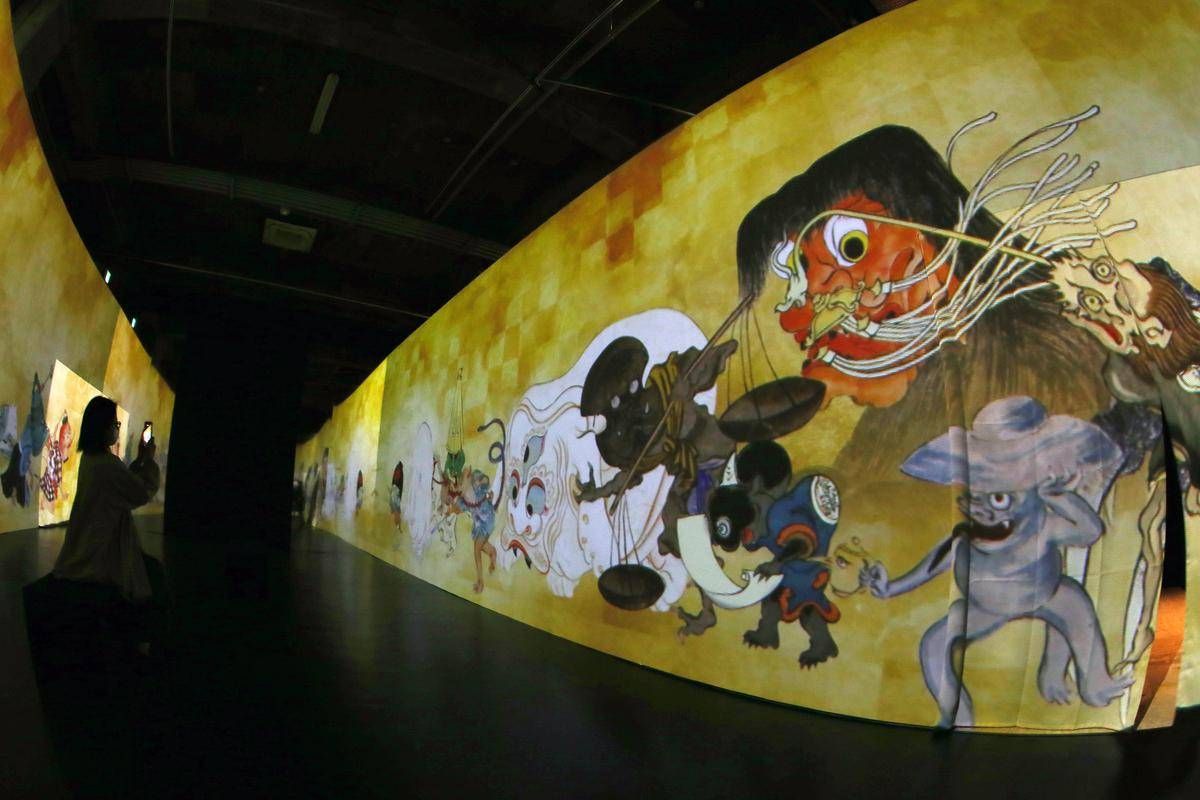
(Adnkronos) – An immersive museum event in Tokyo is bringing “yokai,” supernatural creatures from Japanese folklore, to life, offering visitors a fantastic experience that allows them to admire historical artworks thanks to cutting-edge visual and 3D technologies. The “Yokai Immersive Experience Exhibition Tokyo” – Jiji Press writes – is being held at Warehouse Terrada in the Shinagawa district of the Japanese capital and features yokai digitally recreated from illustrated “emaki” scrolls and “ukiyo-e” woodblock prints. The event showcases works based on over 300 yokai creatures, including “kappa” and “nurarihyon,” distributed across eight themed rooms, such as the one titled “Birthplace of Yokai.” Thanks to projection mapping technology with stereophonic audio, the event reinterprets historical yokai illustrations drawn from artworks of the Edo (1603-1868) and Meiji (1868-1912) periods. The legendary creatures are projected onto walls and floors, giving visitors the feeling of having entered another world.
“This is the first immersive museum event dedicated to yokai art,” said Takeaki Higashiyama, CEO of visual content creation company Hitohata Inc. “I think yokai have many elements that have become the origins of Japanese pop culture, including manga and anime,” he said, referring to Japan’s character culture. Historical yokai art shows that “Japan has had its unique ‘kawaii’ culture since ancient times,” said Higashiyama, producer and general director of the exhibition. One way to enjoy the exhibition is to “compare the yokai depicted in Japanese history with the yokai characters that appear in modern Japanese manga and anime,” Higashiyama added. The exhibition allows visitors to approach yokai art in various ways, highlighting the history of yokai-themed artworks, including works by famous artists such as Utagawa Kuniyoshi and Katsushika Hokusai, alongside contemporary works. “We want people to learn about Japanese culture and pass it on to future generations,” Higashiyama stated.
Naoyuki Shimada, a yokai culture researcher, stated: “The exhibits explain the historical context behind the creation of particular yokai artworks in each era.” “I want this exhibition to be an opportunity for visitors to discover surprises and gain new perspectives,” compared to more familiar forms of culture, added Shimada, the exhibition’s editorial director. Japanese comedian Kintalo, known for her impersonations of famous people, cartoon characters, and yokai, said during a press preview event last week: “There are interactive elements that children can enjoy together.” Some yokai characters, such as “tengu,” goblin-like beings, will be present to welcome visitors on limited days. “The artistic ideas of people from the past are incredible,” observed Kintalo, a mother of two. “I was surprised by the wide variety of facial expressions.”
One of the highlights of the historical artworks featured at the event is “Soma no Furudairi” (the ruined palace of Soma), an ukiyo-e print created by Kuniyoshi, a famous artist of the late Edo period. At the time, yokai were a popular theme in ukiyo-e. The print depicts an imposing skeleton looming from above in an extraordinarily dynamic composition. It is based on a scene from “Uto Yasukata Chugi-den,” a story written by Santo Kyoden. The chromatic contrast of the skeleton emerging from the darkness gives the work an unsettling and tense atmosphere. However, at the same time, there is also a comical element, perhaps due to the skeleton’s mischievous expression. This unsettling but fascinating monster also appears in the moving images present in the room dedicated to “Hyakki Yako” (Night Parade of One Hundred Demons), a theme depicted in scrolls by numerous artists. In the last room of the exhibition, visitors can admire modern artworks from the Yokai Art Museum in Shodoshima, an island in Kagawa Prefecture, western Japan. Chubei Yagyu, an artist specializing in yokai and the museum’s director, emphasized the uniqueness of yokai culture. “If we transform yokai into more entertaining forms and artworks, we can spread them worldwide, so that more people can find them interesting, regardless of their religion or culture.”
Works by Yagyu, a yokai enthusiast since childhood, are also on display, including a huge 7-meter-long painting depicting various yokai creatures, created with black “sumi” ink. He stated that he draws inspiration for his original yokai from everyday life, including rocks, trees, flowers, and other objects that catch his attention. The event, organized in collaboration with the Iwase Bunko Library in Aichi Prefecture, central Japan, will run until June 28 at the Warehouse Terrada G1 building, located near Tennozu Isle stations on the Rinkai Line and the Tokyo Monorail line for Haneda Airport, ensuring easy access to and from Haneda Airport. Visitors can enjoy a discount on the admission ticket if they wear traditional Japanese clothing such as “kimono” and “yukata.” English information will be available throughout the exhibition. Visitors may take photos inside the event. Tickets purchased on the day will cost 2,600 yen for adults. The first edition of the yokai exhibition was held in Nagoya, the capital of Aichi Prefecture, in the summer of 2025, attracting over 120,000 visitors.