
Tokyo, March 23 (Jiji Press)–The Japanese opposition Democratic Party for the People is struggling to maintain its relevance in national politics after the ruling Liberal Democratic Party won a historic victory in last month’s general election. With the ruling bloc holding three-quarters of the seats in the House of Representatives, the all-important lower chamber of parliament, the DPFP’s strategy of negotiating for concessions, rather than taking a confrontational stance against the government, is stalling. The party is also struggling because its key policy proposals, such as seeking a proactive fiscal policy, often overlap with those of Prime Minister Sanae Takaichi’s administration. “In order to normalize Lower House affairs, a report on (Takaichi’s) visit to the United States and intensive deliberations are necessary,” DPFP parliamentary affairs chief Motohisa Furukawa told his counterpart Takashi Endo of the junior ruling Japan Innovation Party last week. The comment reflected the DPFP’s wish to be treated as the largest opposition party, as it has 53 members across both parliamentary chambers. The Centrist Reform Alliance, formed by Lower House members of the Constitutional Democratic Party of Japan and Komeito, has only 49 members, as CDP and Komeito members in the House of Councillors, the upper chamber, have decided to postpone joining the new party. The meeting of the DPFP and JIP parliamentary heads was held at the request of Furukawa. Within the DPFP, there is a sense of crisis over its declining political presence. Until last year’s extraordinary Diet session, when the ruling bloc lacked a majority in both parliamentary chambers, party leader Yuichiro Tamaki had presented his DPFP as an opposition party that was able to realize policies. Backed by its strong say, the party persuaded the ruling bloc to accept demands such as raising the minimum taxable income threshold. But this influence disappeared after last month’s general election. In Lower House deliberations on the fiscal 2026 draft budget, the DPFP offered to vote in favor of the draft if voting was postponed, but this was ignored by the prime minister. “The DPFP often breaks its promises,” a senior LDP member said. “We can’t trust them.” The ruling bloc plans to seek support in the Upper House, where it is four seats shy of a majority, from Team Mirai and the Conservative Party of Japan, instead of the DPFP. A senior DPFP member admitted that the party’s “business model” is breaking down. Still, switching to a more confrontational stance against the government is not easy. The DPFP and the Takaichi administration have many common policy objectives, such as the establishment of an espionage prevention law, and the party’s motto is to seek “solutions rather than confrontation.” “It’s difficult to see how to deal with the administration,” a party source said. Reviewing its general election performance, the DPFP said that its gain of just one seat has “exposed the limits of increasing supporters.” It called for significantly raising the number of regional assembly members and reducing reliance on social media. If the party fields many candidates against those of the Centrist Reform Alliance, however, it runs the risk of drawing the ire of the Japanese Trade Union Confederation, or Rengo, a key support base for both parties. An opposition source said that the CDP’s attempt to win over Tamaki’s support to take power from the LDP last autumn “may have been the last opportunity for a ‘Prime Minister Tamaki.'” END [Copyright The Jiji Press, Ltd.]
Japan DPFP Struggles with Reduced Presence after Election

Related Posts

Japan, Pakistan Agree to Cooperate on Middle East Issues
Tokyo, April 13 (Jiji Press)–Japanese Prime Minister Sanae Takaichi and her Pakistani counterpart, Shehbaz Sharif, agreed Monday to work together to ease tensions in the Middle East at an early date. In their 15-minute telephone conversation, held after the United States and
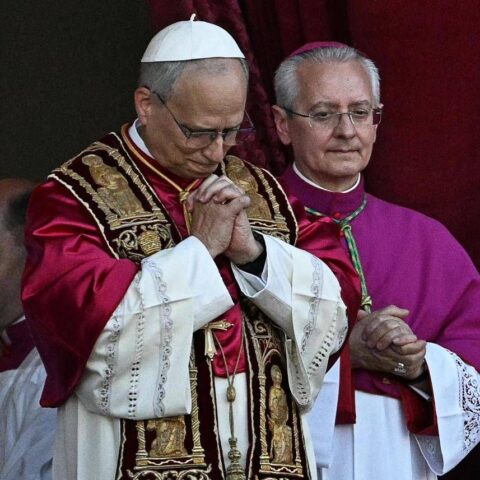
Tajani lauds Leo’s strength, bravery, determination, commitment to peace
(Adnkronos) – Foreign minister Antonio Tajani praised Pope Leo on Monday, calling him “a strong”, “determined” and “courageous” man who is committed to world peace and “defends the fundamental values of the Christian faith”. “I have the utmost respect for the Holy