Tokyo, Dec. 23 (Jiji Press)–Debate over reforming Japan’s retrial system has intensified following the landmark acquittal in October 2024 of Iwao Hakamata, now 89, who was wrongfully convicted of a 1966 murder and spent about 48 years in custody. It took 43 years from the first retrial petition until his acquittal was finalized, exposing serious flaws in the current system. At the heart of the ongoing discussions in a subcommittee of the Legislative Council, an advisory panel to the justice minister, is how to establish clearer rules on the disclosure of evidence. Absence of Clear Rules In Japan, a defendant in a serious criminal case may seek a review by a high court and, subsequently, by the Supreme Court if dissatisfied with the district court’s first-instance judgment. Under this three-tier trial system, a retrial may be granted if a serious error is suspected in a finalized judgment. To petition for a retrial, the defendant must present new evidence and demonstrate its clear significance. The court that receives a retrial petition conducts the necessary proceedings on its own authority and decides whether to reopen the criminal case. There are almost no clear rules governing these proceedings, however. Even when investigative authorities hold evidence that has not been submitted to the court and the petitioner requests its disclosure on the basis that it may support a claim of innocence, the prosecution is under no legal obligation to comply. The lack of a disclosure duty often creates serious obstacles to the retrial process. Hakamata was accused of murdering four members of the family of an executive of a miso soybean paste producer in Shizuoka Prefecture, central Japan. Prosecutors based their case primarily on five bloodstained articles of clothing that were discovered in a miso tank at the company, where Hakamata was employed, about 14 months after the killings. When key evidence was finally disclosed during a second retrial request, the defense team grew suspicious after examining photographs of the clothing, as the color of the bloodstains looked unnatural. Following up this discrepancy, the team submitted new materials, including an expert report based on experiments in which similar clothing was soaked in miso. This evidence was accepted as new and ultimately led to the court’s decision to open a retrial. Narrow or Broad Disclosure In the wake of the Hakamata case, discussions on revising the retrial system began this spring at a criminal law subcommittee of the Legislative Council. Legal professionals and scholars on the committee have reached a broad consensus on the need to establish clear rules for evidence disclosure, though they remain divided over the details of how such provisions should be designed. Many judges, prosecutors and scholars remain cautious about provisions that would mandate broad disclosure, especially in light of how retrial petition proceedings are currently conducted. One scholar has argued that “an appropriate system is one in which, when the court deems a piece of evidence necessary for the proceedings, it may order the prosecutor to submit it.” Another maintains that disclosure should be limited to “evidence related to the grounds for the retrial request.” By contrast, one lawyer emphasized the importance of broad disclosure so that petitioners can fully present and substantiate their arguments. “It is extremely difficult for a petitioner to obtain and present new evidence that is clearly exculpatory from the outset,” the lawyer said. Another lawyer, a former judge who was involved in the decision to reopen the Hakamata case, voiced concern about moves to restrict the scope of disclosure. “There is a real risk that evidence courts have so far ordered disclosed at their discretion and that has often formed the basis for decisions to grant retrials may no longer come to light,” the former judge said. Prosecutor Objections There are 14 main points of contention in the ongoing review of the retrial system. One full round of discussions has already been completed. At a session of the Legislative Council subcommittee, held in December, the Justice Ministry presented a draft plan for the revision. On the crucial question of the scope of evidence disclosure, the ministry put forward two options. Under Plan A, disclosure would be limited to “evidence related to the grounds for a retrial request.” Plan B, on the other hand, would require the disclosure of a broader range of evidence to include “certain categories.” The subcommittee plans to proceed with discussions centered on Plan A. Another major point of debate is whether prosecutors should be permitted to file objections to court decisions to start a retrial. The ministry presented arguments for both prohibiting such objections and maintaining the current system, which permits them. In the Hakamata case, such objections have been singled out as a factor contributing to the prolonged duration of the proceedings. The question of whether to ban such objections altogether remains at the center of the ongoing discussions. END [Copyright The Jiji Press, Ltd.]
FOCUS: Japan’s Retrial System under Review over Evidence Rules

Related Posts

Japan, Pakistan Agree to Cooperate on Middle East Issues
Tokyo, April 13 (Jiji Press)–Japanese Prime Minister Sanae Takaichi and her Pakistani counterpart, Shehbaz Sharif, agreed Monday to work together to ease tensions in the Middle East at an early date. In their 15-minute telephone conversation, held after the United States and
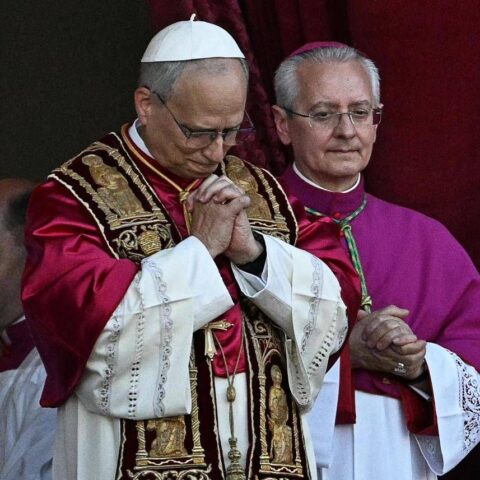
Tajani lauds Leo’s strength, bravery, determination, commitment to peace
(Adnkronos) – Foreign minister Antonio Tajani praised Pope Leo on Monday, calling him “a strong”, “determined” and “courageous” man who is committed to world peace and “defends the fundamental values of the Christian faith”. “I have the utmost respect for the Holy